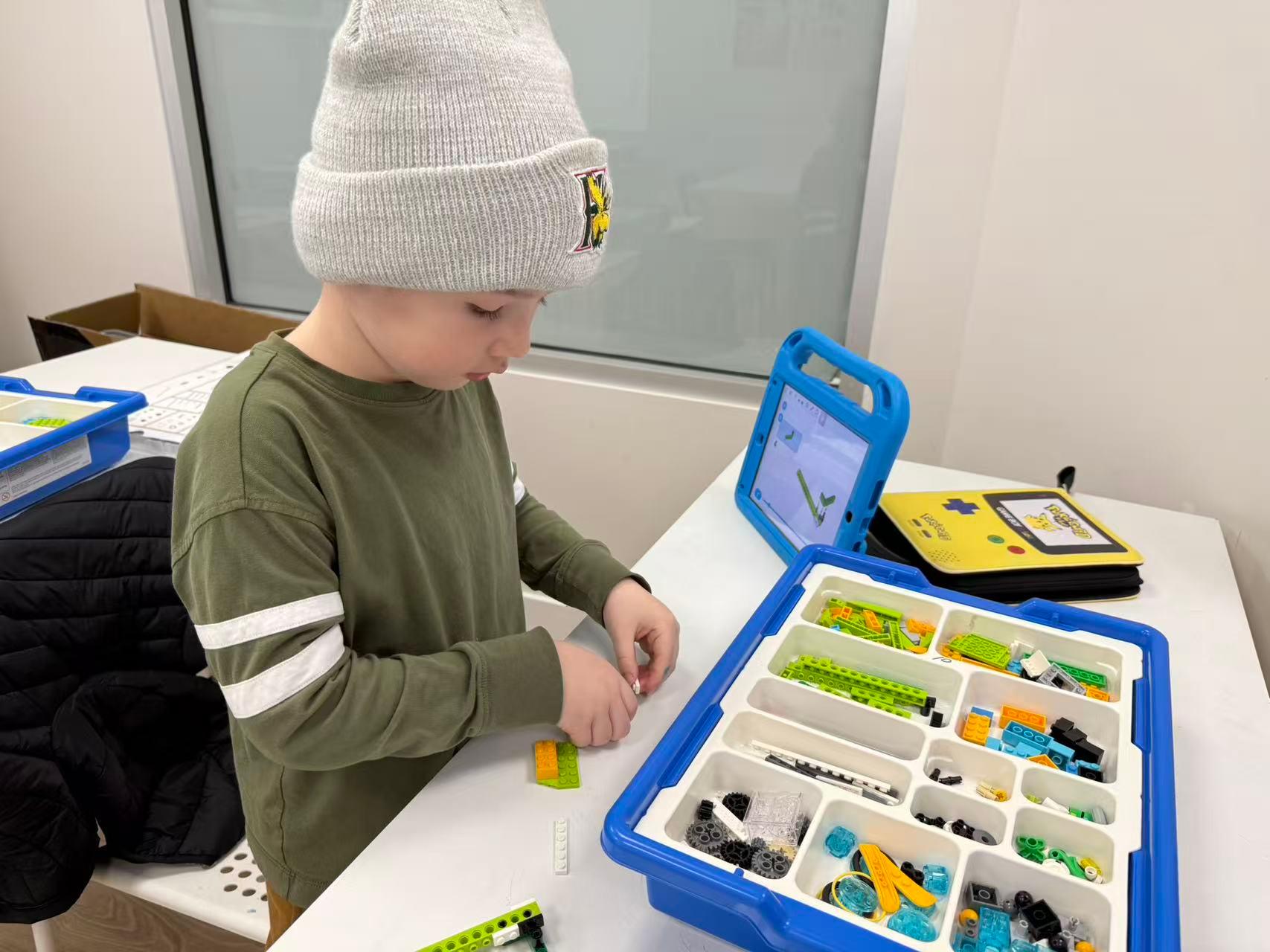
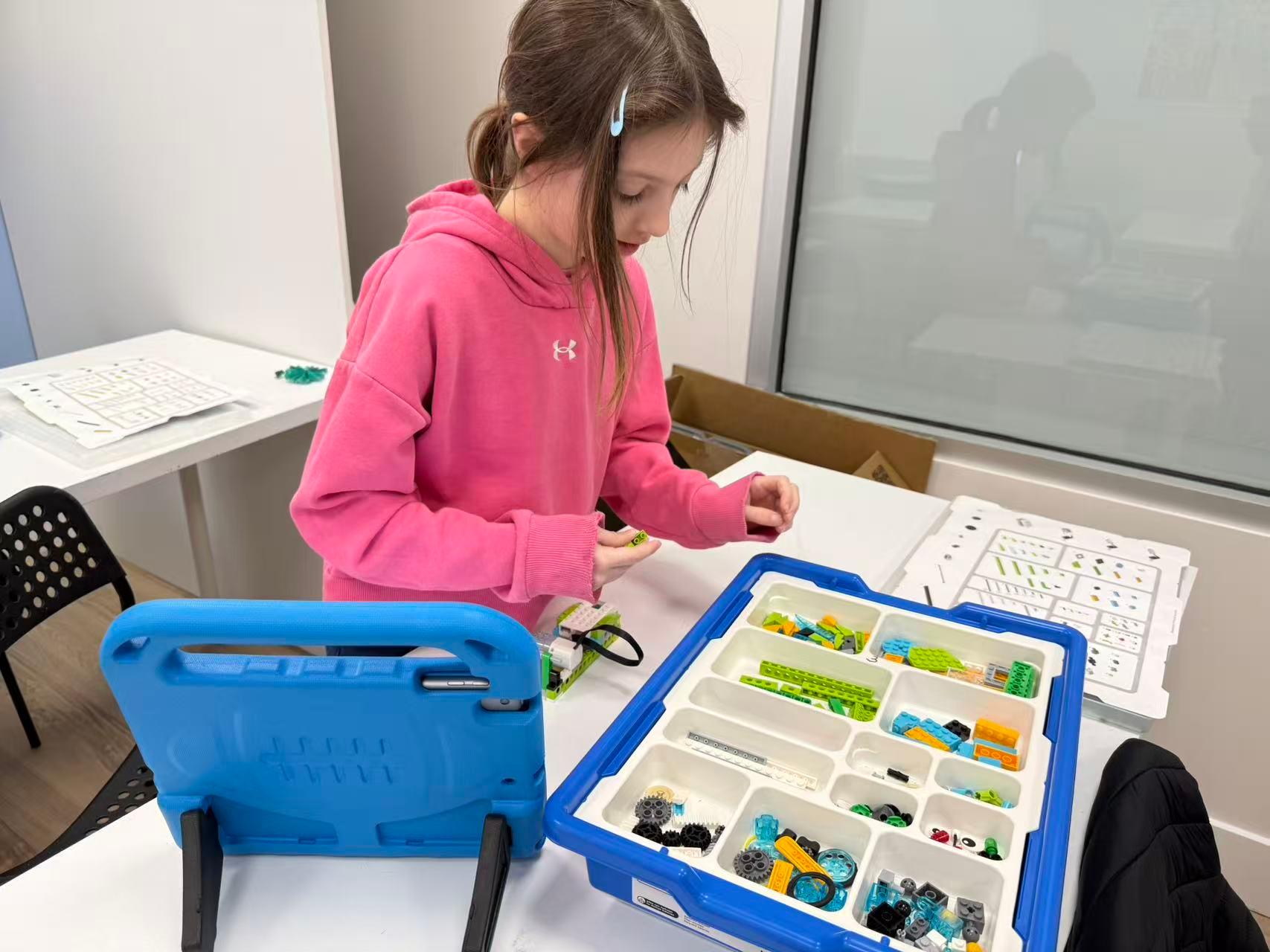
Logical and computational thinking; Problem-solving and innovation skills; Teamwork and communication; Scientific inquiry and experimentation; Basic programming and design understanding;
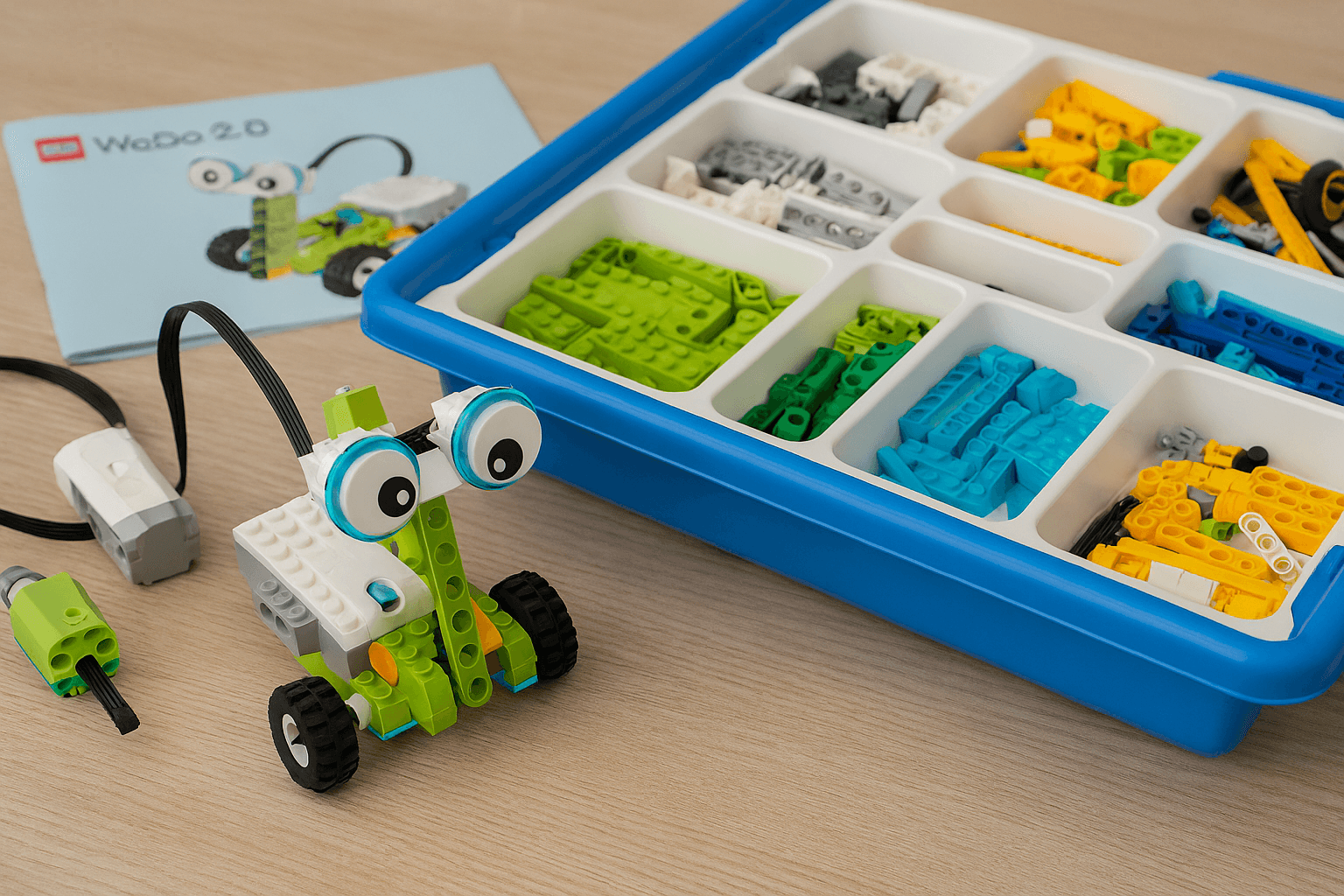
Grade 3 - Grade 4 (ages 8–9)
Learning LEGO WeDo is to help students explore science and engineering through play, develop early coding and problem-solving skills, and gain confidence as creative thinkers and collaborators. Encourage students to “learn by doing and playing.”
By the end of the program, students should be able to:
✅ Logical and computational thinking
✅ Problem-solving and innovation skills
✅ Teamwork and communication
✅ Scientific inquiry and experimentation
✅ Basic programming and design understanding
Students explore how the machines work and how they can be combined to create complex mechanisms. They also need learn the process about engineering. Key concepts include:
• Gear transmission (large and small gears, gear ratio)
• Belt and lever mechanisms
• Wheels, axles, pulleys, linkages, hinges
• Balance and center of gravity
• Force and motion (push, pull, friction)
• Speed and direction changes
• Energy transformation (mechanical ↔ electrical)
• Identify a problem → Plan → Build → Test & Improve
• Record data and observations
• Encourage creativity and problem-solving
Students explore how coding helps the machines and the logical relationship between all the coding blocks. They will also use sensors to achieve tasks. Key concepts include:
• Sequence (step-by-step actions)
• Loop (repeat) • Conditional logic (if…then)
• Event triggers (when button pressed, when sensor detects)
• Motion blocks (motor direction, speed)
• Sound blocks (play sounds) • Light blocks (LED color changes)
• Sensor blocks (motion sensor, tilt sensor)
• Control blocks (start, stop, wait, repeat)
• Find and fix errors
• Modify commands and test results
• Step-by-step reasoning and logical debugging
Students explore much broader content beyond just robots. Each unit topic can focus on: one science concept + one programming command + one hands-on project.
Key concepts include:
• Science topics (wind power, water flow, and animal motion)
• Math concepts (angle, speed, counting, timing)
• Art and storytelling (design, color, theme)
• Social and environmental topics (transportation, sustainability)
• Each project starts with a guiding question (e.g., How can we make a car climb a ramp?)
• Students design, build, program, and present their solutions