Mechanical Principles; Energy and Power Concepts; Key Physics Concepts; Engineering Design and Problem-Solving; Creativity and Application;
🎯 Target Age
Grade 2 - Grade 3 (ages 7–8)
Goal – Learning Outcomes
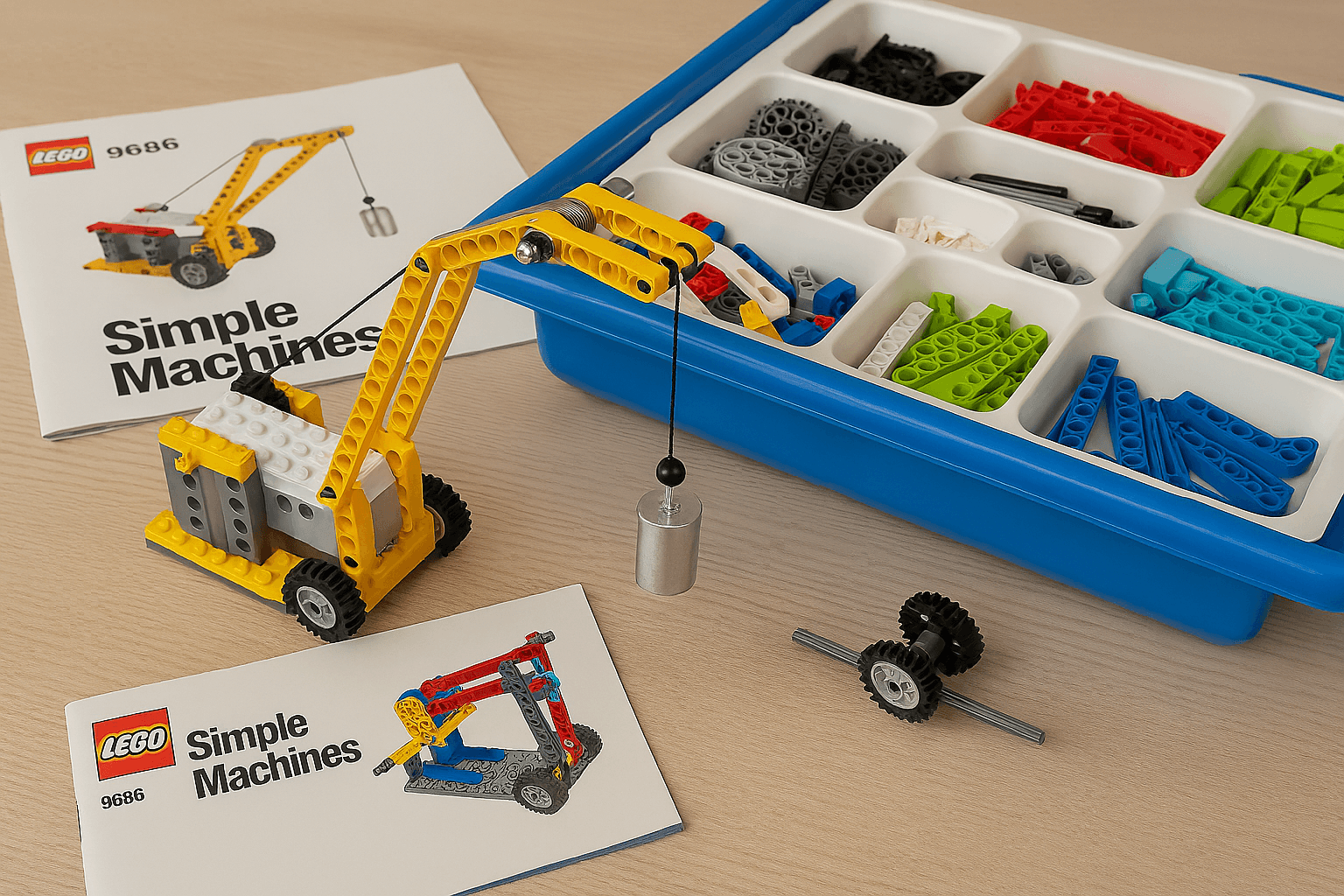
LEGO Education 9686 (also called the Simple & Powered Machines Set) is designed for upper elementary to middle school students and focuses on mechanics, energy, and engineering design principles.
By the end of the program, students should be able to:
✅ Understand and explain how simple and compound machines function
✅ Demonstrate how energy is transferred and transformed
✅ Apply mechanical principles to design working models
✅ Work collaboratively and communicate design ideas clearly
✅ Analyze test data and improve solutions
Foundational Lego 9686 Concepts (Teaching Target)
Mechanical Principles
Students explore how simple machines work and how they can be combined to create complex mechanisms.
Key concepts include:
• Gears: gear ratio, torque, direction of rotation
• Levers: classes of levers, mechanical advantage
• Pulleys: fixed and movable pulleys, block and tackle systems
• Wheels and Axles: friction, rotation, efficiency
• Inclined Planes: force and distance relationships
• Cams and Linkages: converting rotational motion to linear or reciprocating motion
Energy and Power Concepts
Students learn how energy can be transferred, transformed, and used efficiently.
Key points:
• Energy forms: potential, kinetic, and mechanical energy
• Energy transfer: from motor to gears, or from weights to motion
• Friction and resistance: reducing loss of energy in systems
• Mechanical advantage: using machines to multiply force
• Electric motors: direction, speed, and power control
Engineering Design and Problem-Solving
Students follow the engineering design cycle to plan, build, test, and improve models.
They learn to:
• Identify a real-world problem
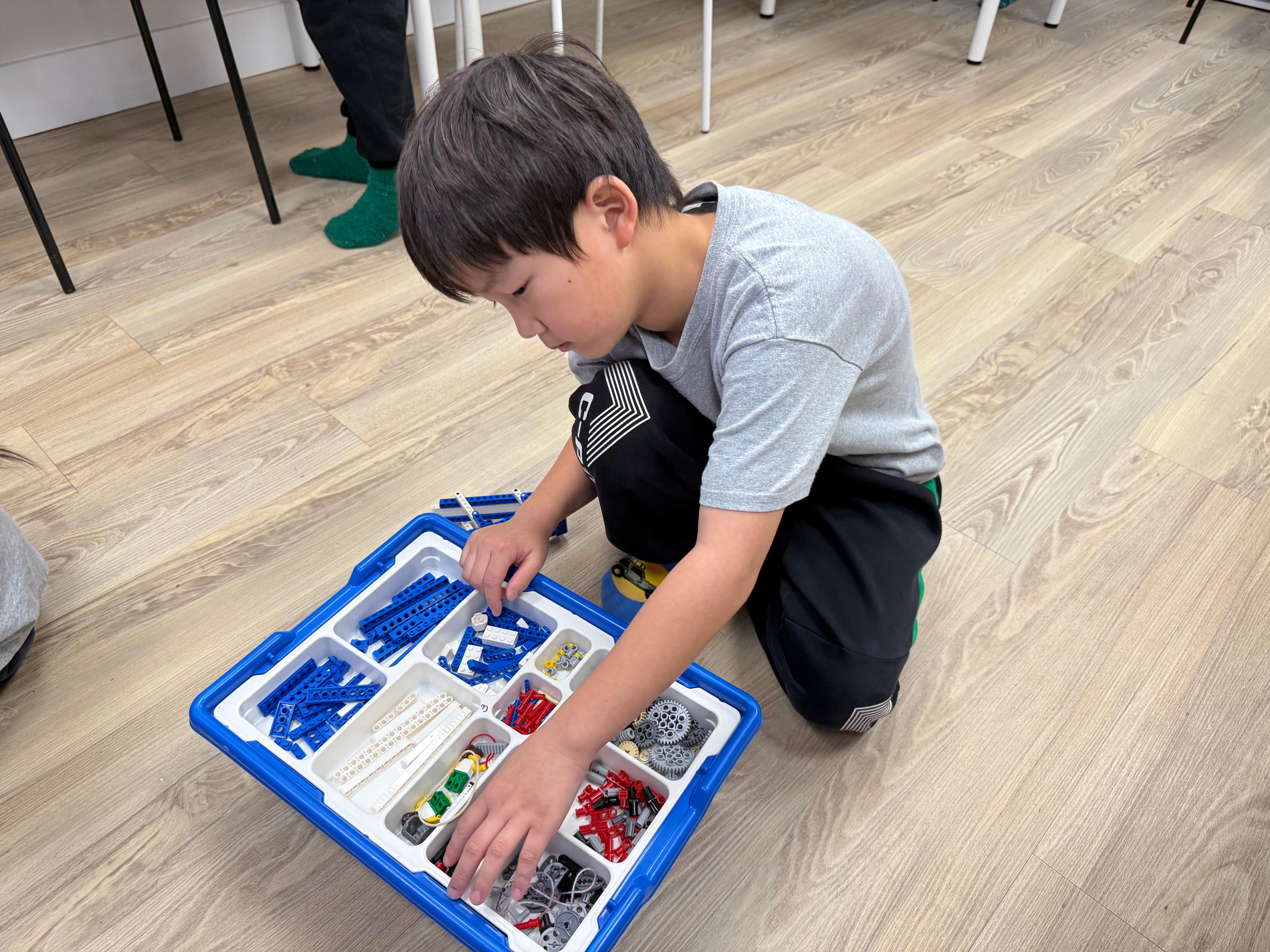
• Design a mechanical solution using LEGO parts
• Build and test a prototype
• Analyze results and refine the design
Key Physics Concepts
Through hands-on experiments, students understand:
• Force, motion, and equilibrium
• Work = Force × Distance • Speed and acceleration
• Efficiency and energy loss
• Relationship between load, effort, and pivot in machines
Creativity and Application
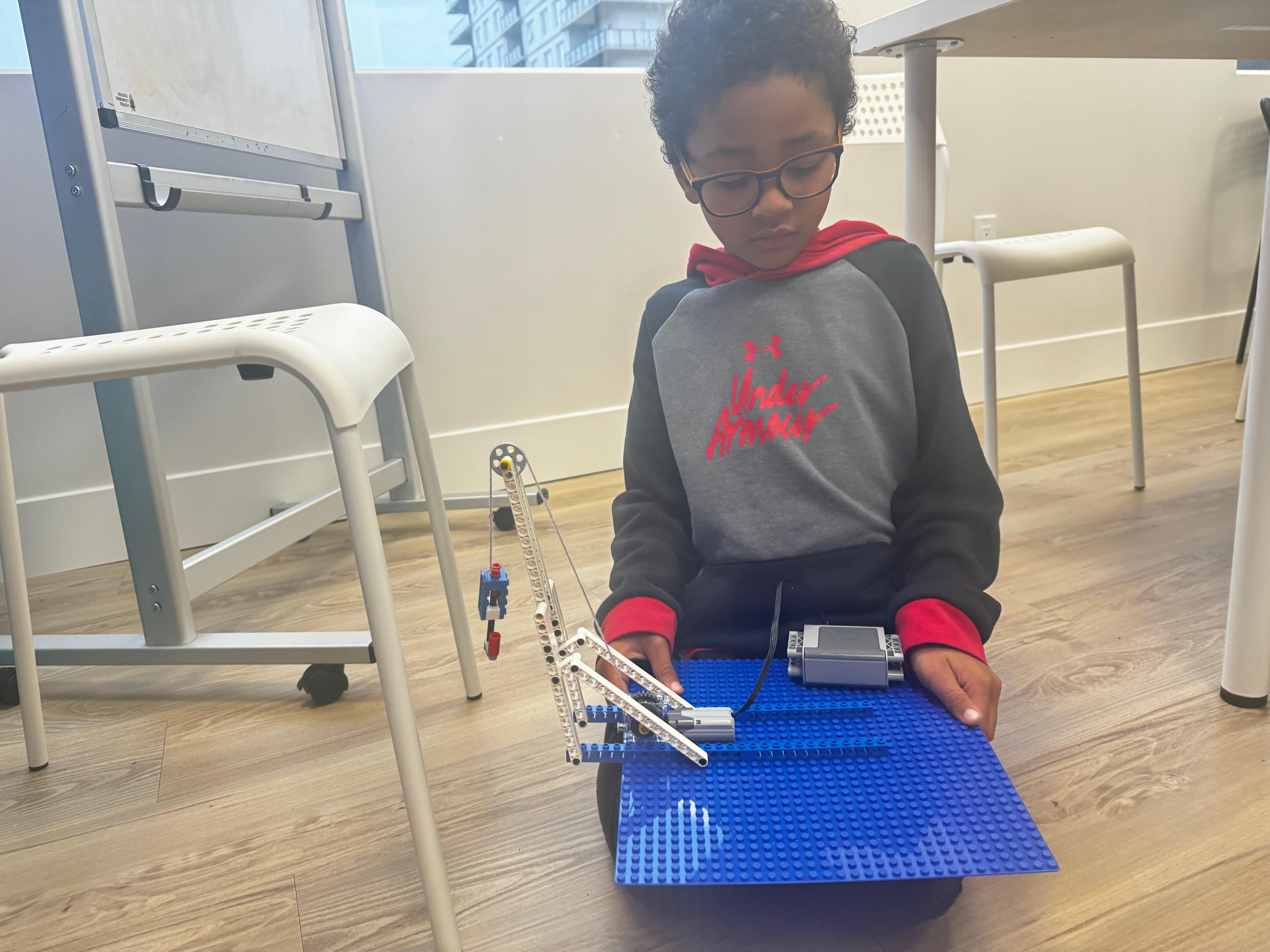
• Design and build models like cranes, cars, windmills, or balance scales
• Combine multiple mechanisms to solve challenges
• Present their models and explain how each part works